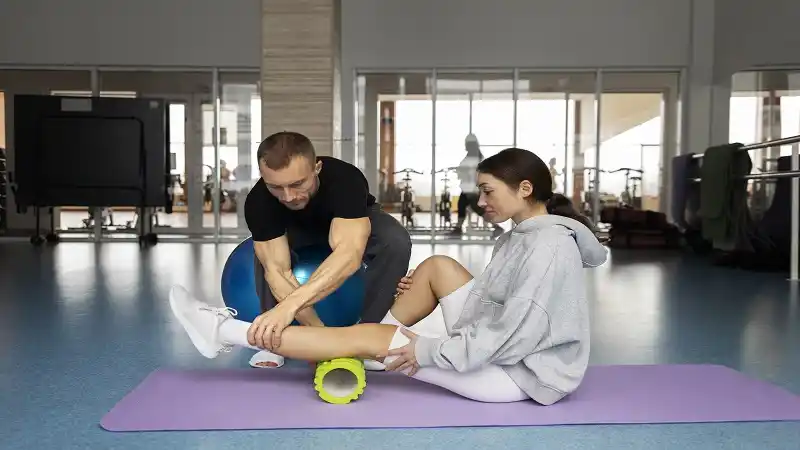
Physical therapy education forms the foundation for understanding how the human body moves, adapts, and protects itself from injury. Through systematic training in biomechanics, anatomy, and movement analysis, professionals learn to identify vulnerabilities before they become problems.
This knowledge extends beyond clinical settings, influencing how individuals approach daily activities, exercise routines, and athletic performance. The gap between knowing proper movement and applying it effectively often determines whether someone maintains long-term physical health or faces recurring setbacks that could have been avoided.
Why Physical Therapy Education Plays a Key Role in Injury Prevention
Physical therapy education empowers individuals to understand their bodies’ biomechanics, movement patterns, and physical limitations before injuries occur. This knowledge enables people to recognize improper techniques during daily activities, exercise routines, and occupational tasks that could lead to musculoskeletal damage.
Educated individuals learn to identify early warning signs like muscle imbalances, joint stiffness, and compensatory movements that precede serious injuries. They acquire practical strategies for maintaining proper posture, executing safe lifting mechanics, and implementing appropriate warm-up protocols.
Physical therapists teach evidence-based movement principles that reduce strain on vulnerable tissues and joints. This proactive approach shifts focus from reactive treatment to preventive care, decreasing healthcare costs and improving quality of life.
Understanding these fundamental concepts creates lasting behavioral changes that protect against both acute injuries and chronic overuse conditions. This is why physical therapy education is on the rise in 2026, and why many people ask how many years PT school is.
How a Licensed Physical Therapist Assesses Movement and Functional Limitations
Licensed physical therapists employ systematic evaluation methods to identify movement dysfunctions and physical restrictions that may contribute to injury risk. The assessment begins with a thorough postural analysis, examining body alignment in static and dynamic positions. Therapists conduct range of motion testing to measure joint flexibility and identify compensatory movement patterns that stress vulnerable tissues.
Functional movement screening reveals asymmetries, weaknesses, and coordination deficits during activities like squatting, lunging, and reaching. Gait analysis evaluates walking and running mechanics to detect biomechanical inefficiencies. Manual muscle testing determines strength imbalances between opposing muscle groups, while palpation identifies areas of tissue tension or restriction.
These evaluation techniques provide objective data that guides targeted intervention strategies, addressing specific limitations before they escalate into injuries requiring more extensive rehabilitation.
Understanding Proper Techniques to Tape Your Knee for Stability During Activity
Knee taping provides mechanical support and proprioceptive feedback that enhance joint stability during physical activity. Physical therapists educate individuals on specific taping methods based on injury type and activity demands.
The McConnell technique addresses patellar tracking dysfunction by repositioning the kneecap, while kinesiology taping offers elastic support without restricting range of motion.
Proper application requires clean, dry skin and strategic tape placement along anatomical landmarks. For medial or lateral knee instability, therapists demonstrate anchor points above and below the joint, creating supportive strips that reinforce ligamentous structures. Tension variation determines the level of restriction versus mobility.
Education emphasizes recognizing contraindications, including skin irritation, circulation compromise, or allergic reactions. Physical therapists stress that taping serves as a temporary intervention alongside strengthening exercises and movement retraining for long-term joint protection. So tape your knee for stability if you must.
Improving Balance, Mobility, and Joint Support Through Targeted Exercises
Targeted exercise programs form the foundation of sustainable joint health by addressing neuromuscular deficits that compromise stability and function.
Physical therapists design progressive protocols that strengthen stabilizing muscles around vulnerable joints while enhancing proprioceptive awareness. Single-leg balance exercises challenge the body’s position sense, forcing neural adaptations that improve reactive control during dynamic movements.
Resistance training targeting hip abductors, rotator cuff muscles, and core stabilizers creates muscular scaffolding that protects joints from excessive stress. Mobility work addressing restrictions in ankle dorsiflexion, hip flexion, and thoracic rotation prevents compensatory movement patterns that overload specific structures.
Plyometric exercises bridge the gap between controlled strength and functional performance, teaching joints to absorb and distribute forces efficiently. This systematic approach reduces injury risk while optimizing athletic performance and daily movement quality.
Common Causes of Movement Instability and Repetitive Stress Injuries
Movement instability and repetitive stress injuries emerge from identifiable biomechanical faults and training errors that accumulate over time.
Muscular imbalances create compensatory movement patterns that place excessive load on joints and connective tissues. Poor posture during daily activities generates abnormal stress distribution across the kinetic chain, leading to overuse syndromes. Inadequate recovery between training sessions prevents tissue adaptation and repair, increasing vulnerability to injury.
Faulty movement mechanics stem from weak stabilizing muscles, particularly in the core and hip regions. Sudden increases in training volume or intensity overwhelm the body’s adaptive capacity. Improper technique during exercise or occupational tasks creates repetitive microtrauma. Limited flexibility restricts the normal range of motion, forcing adjacent structures to compensate beyond their intended function. Environmental factors, including inadequate footwear and uneven surfaces, further compromise movement stability.
The Importance of Posture, Flexibility, and Strength Training in Daily Movement
Ideal daily function requires the integration of three foundational components that work synergistically to support efficient movement patterns. Proper posture establishes optimal skeletal alignment, reducing unnecessary strain on joints and connective tissues during static and dynamic activities.
Flexibility maintains adequate range of motion across all joints, preventing compensatory movement patterns that overload specific structures. Strength training develops muscular capacity to stabilize joints and control movement through complete ranges of motion.
Physical therapy education emphasizes these interconnected elements as essential for injury prevention. When posture deteriorates, muscles work inefficiently, leading to premature fatigue. Limited flexibility forces the body to recruit incorrect muscle groups for basic tasks.
Insufficient strength creates instability during loading activities. Together, these three components form the foundation for sustainable movement patterns throughout daily activities.
Using Rehabilitation Programs to Support Recovery and Long-Term Performance
When injury or dysfunction disrupts the foundational components of movement, structured rehabilitation programs provide a systematic approach to restore function and prevent recurrence.
Physical therapists design progressive protocols that address specific impairments while rebuilding strength, mobility, and neuromuscular control. These programs begin with pain management and tissue healing, then advance through functional movement patterns that mirror daily activities and sport-specific demands.
Evidence-based rehabilitation incorporates manual therapy, therapeutic exercise, and movement retraining to correct compensatory patterns that often develop after injury. By identifying and addressing underlying biomechanical deficits, therapists reduce the likelihood of future injuries. Long-term performance benefits emerge when individuals understand proper movement mechanics and maintain conditioning programs beyond initial recovery.
This educational component transforms rehabilitation from temporary treatment into sustainable injury prevention strategy.
Preventive Strategies for Athletes, Active Individuals, and Older Adults
Physical therapy’s preventive framework adapts to meet distinct physiological demands across different populations, recognizing that injury risk factors vary considerably between competitive athletes, recreational exercisers, and aging adults.
Athletes require sport-specific movement pattern training, eccentric strengthening protocols, and load management strategies to address repetitive strain and high-impact forces. Practitioners implement pre-participation screenings and biomechanical assessments to identify vulnerability patterns before tissue breakdown occurs.
Active individuals benefit from progressive loading principles, proper warm-up education, and cross-training recommendations that prevent overuse injuries common in single-activity participation.
Older adults receive fall prevention protocols incorporating balance training, proprioceptive exercises, and environmental modification guidance. Strength preservation through resistance training combats sarcopenia while mobility work maintains functional independence.
Each population requires tailored interventions matching their specific movement demands and physiological capabilities.
Future Trends in Physical Therapy Education and Movement Science
As technological capabilities expand exponentially, physical therapy education increasingly integrates artificial intelligence, wearable sensor technology, and virtual reality platforms to enhance diagnostic precision and treatment individualization.
Machine learning algorithms now analyze movement patterns with unprecedented accuracy, identifying subtle biomechanical deficiencies before injuries occur. Wearable devices provide real-time biofeedback during rehabilitation exercises, enabling immediate correction of compensatory movements.
Virtual reality creates immersive training environments where practitioners refine clinical reasoning skills through simulated patient scenarios.
Curriculum development emphasizes data literacy, requiring students to interpret complex biomechanical analytics alongside traditional assessment methods. Telehealth expansion necessitates remote evaluation competencies, particularly for underserved populations.
Predictive modeling combines genetic markers, movement history, and lifestyle factors to create personalized injury prevention protocols. These emerging technologies transform physical therapy from reactive treatment to proactive, precision-based movement optimization. See More